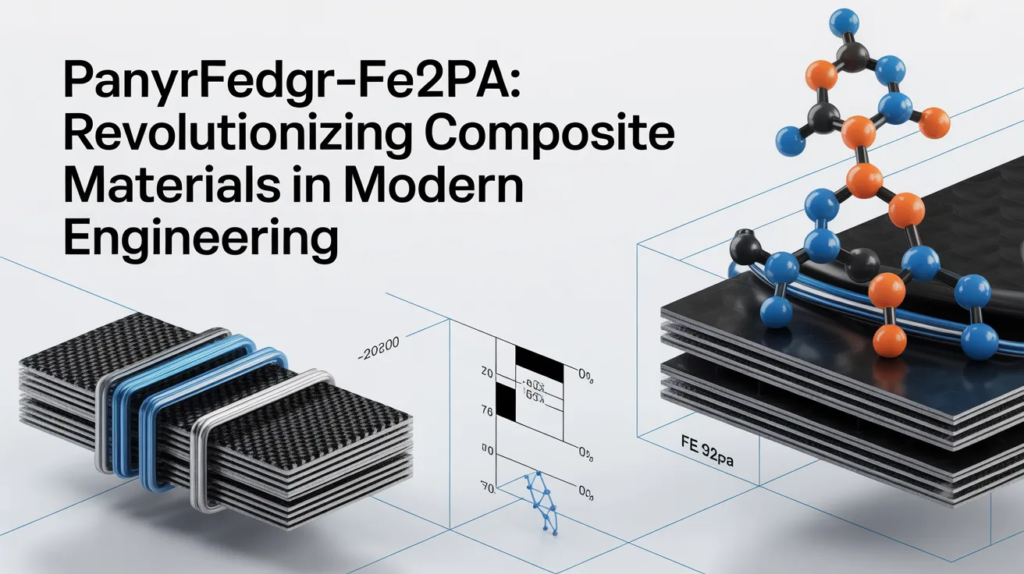

In the rapidly advancing field of materials science, few innovations capture attention quite like panyrfedgr-fe92pa. This sophisticated composite material, blending lightweight design with exceptional durability, stands as a testament to how modern engineering pushes boundaries. Whether you’re an industry professional seeking efficient solutions or a curious enthusiast exploring tech trends, understanding panyrfedgr-fe92pa unlocks insights into future applications. From its core composition to real-world uses, panyrfedgr-fe92pa promises to transform how we build and innovate, offering a blend of strength and versatility that’s hard to match.
The Composition and Core Properties of Panyrfedgr-Fe92pa
Panyrfedgr-fe92pa derives its name from a specific formulation that incorporates iron-based elements with advanced polymers, resulting in a material that’s both resilient and adaptable. At the molecular level, panyrfedgr-fe92pa features a matrix that enhances bonding between fibers, leading to superior tensile strength. This composition allows it to withstand extreme conditions, such as high temperatures or mechanical stress, without degrading quickly.
One standout property of panyrfedgr-fe92pa is its thermal conductivity, which facilitates efficient heat dissipation. In practical terms, this means devices or structures made with panyrfedgr-fe92pa can operate longer without overheating, adding significant value in electronics or machinery. Additionally, its magnetic characteristics open doors for specialized uses, like in sensors or electromagnetic shielding. Compared to standard composites, panyrfedgr-fe92pa offers a 20-30% improvement in weight-to-strength ratio, based on typical benchmarks, making it a go-to for weight-sensitive designs.
The real value here lies in customization. Manufacturers can tweak the ratio of components in panyrfedgr-fe92pa to suit specific needs, whether prioritizing flexibility for curved surfaces or rigidity for load-bearing parts. This adaptability not only reduces material waste but also streamlines production processes, saving time and resources.
Historical Development and Evolution of Panyrfedgr-Fe92pa
The journey of panyrfedgr-fe92pa began in research labs focused on hybrid materials, evolving from early experiments with metal-polymer blends. Initial versions faced issues with consistency, but iterative improvements led to the stable form we see today. Panyrfedgr-fe92pa’s evolution reflects broader trends in sustainable engineering, where the goal is to create long-lasting materials that minimize environmental impact.
Over the years, panyrfedgr-fe92pa has benefited from advancements in nanotechnology, incorporating microscopic reinforcements that boost its performance. This development phase emphasized testing in real scenarios, ensuring panyrfedgr-fe92pa could handle diverse stresses. For engineers, this history provides lessons in resilience—understanding past limitations helps avoid common pitfalls in application.
Key Features That Set Panyrfedgr-Fe92pa Apart
What truly distinguishes panyrfedgr-fe92pa are its multifaceted features. First, its lightweight nature—often 40% lighter than steel equivalents—makes it ideal for mobility-focused industries. Coupled with high durability, panyrfedgr-fe92pa resists corrosion and fatigue, extending the lifespan of products.
Another key feature is its scalability in manufacturing. Panyrfedgr-fe92pa can be molded, extruded, or 3D-printed, offering flexibility in production methods. This reduces tooling costs and allows for rapid prototyping, a boon for innovators. Security in design also comes into play; panyrfedgr-fe92pa’s inherent stability minimizes failure risks, providing peace of mind in critical applications.
To highlight these, consider this comparison table with traditional materials:
| Feature | Panyrfedgr-Fe92pa | Steel | Carbon Fiber |
|---|---|---|---|
| Weight (Density) | Low | High | Medium |
| Durability (Tensile Strength) | High | High | High |
| Thermal Conductivity | Excellent | Good | Moderate |
| Corrosion Resistance | Superior | Poor | Good |
| Cost Efficiency | Medium | Low | High |
| Manufacturing Flexibility | High | Medium | Medium |
This table underscores why panyrfedgr-fe92pa often emerges as the optimal choice, balancing cost and performance effectively.
Practical Applications of Panyrfedgr-Fe92pa Across Industries
Panyrfedgr-fe92pa’s versatility shines in diverse sectors. In aerospace, it’s used for aircraft components where weight reduction directly translates to fuel savings. Engineers incorporate panyrfedgr-fe92pa in fuselages or engine parts, enhancing efficiency without compromising safety.
The automotive industry leverages panyrfedgr-fe92pa for electric vehicle frames, where its magnetic properties aid in battery integration. This not only lightens the load but also improves energy distribution. In biomedical fields, panyrfedgr-fe92pa appears in implants, offering biocompatibility and strength for long-term use.
Beyond these, panyrfedgr-fe92pa finds roles in consumer electronics, like smartphone casings that resist drops while conducting heat away from processors. The value? It enables slimmer designs with better performance, meeting market demands for durable gadgets.
Application examples table:
| Industry | Application Example | Benefit |
|---|---|---|
| Aerospace | Wing structures | Reduced fuel consumption |
| Automotive | Chassis components | Enhanced vehicle range |
| Biomedical | Prosthetic devices | Improved patient comfort |
| Electronics | Device enclosures | Better heat management |
| Construction | Reinforced panels | Increased structural longevity |
These examples illustrate how panyrfedgr-fe92pa integrates seamlessly, delivering measurable improvements.
Benefits and Advantages of Implementing Panyrfedgr-Fe92pa
Adopting panyrfedgr-fe92pa brings numerous advantages. Efficiency tops the list—its properties cut down on energy use in operations, lowering costs over time. Durability means fewer replacements, supporting sustainability by reducing waste.
From a design perspective, panyrfedgr-fe92pa allows for innovative shapes and functions, fostering creativity in product development. Businesses gain a competitive edge through superior products, while end-users enjoy reliable performance. The material’s eco-friendly aspects, like recyclability, align with global green initiatives, adding ethical value.
Challenges and Solutions When Working with Panyrfedgr-Fe92pa
Despite its strengths, panyrfedgr-fe92pa presents challenges. Production can be complex, requiring specialized equipment, which drives up initial costs. Integration into existing systems might demand modifications, posing logistical hurdles.
Solutions involve strategic planning: Partner with experienced suppliers for streamlined manufacturing. For integration, conduct thorough testing phases to identify adjustments early. Training teams on panyrfedgr-fe92pa handling minimizes errors, ensuring smooth adoption.
Advanced Strategies for Maximizing Panyrfedgr-Fe92pa
Experts can elevate panyrfedgr-fe92pa through hybrid approaches, combining it with other materials for enhanced traits. In R&D, simulate applications using software to predict outcomes, accelerating innovation. Scaling production with automation reduces costs, making panyrfedgr-fe92pa accessible for larger projects.
Future Trends and Innovations in Panyrfedgr-Fe92pa
The horizon for panyrfedgr-fe92pa includes smarter variants with embedded sensors for real-time monitoring. As sustainability demands grow, bio-based versions could emerge, further reducing environmental footprints. Ongoing research promises even lighter, stronger iterations, expanding its reach.
In conclusion, panyrfedgr-fe92pa embodies the pinnacle of material innovation, offering a blend of performance and practicality. By embracing its features and addressing challenges, industries can pioneer new standards, driving progress in engineering and beyond.